
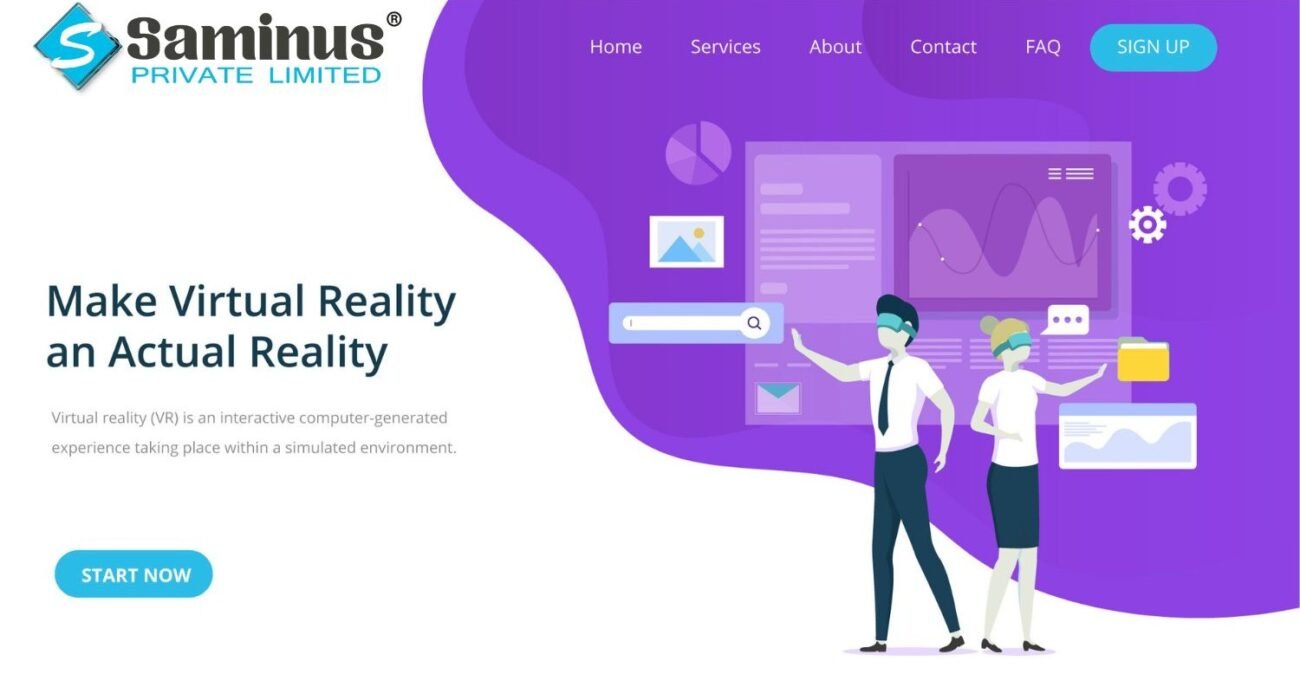
In the contemporary digital ecosystem, traffic is a commodity, but conversion is a craft. For businesses looking to scale, a landing page is no longer just a digital brochure; it is your most tireless sales executive.
At the intersection of cognitive psychology and high-end aesthetics lies Conversion-Focused Landing Page Design. Unlike a standard website, which encourages exploration, a high-converting landing page is a singular path to a specific action.
Here is how premium agencies approach the art of turning clicks into customers.
1. The Power of the “Above-the-Fold” Narrative
You have less than five seconds to capture a visitor’s attention. Premium design dictates that your value proposition must be immediate and visceral.
-
The Headline: Move away from “What we do” toward “What you gain.”
-
The Sub-headline: Support the claim with a punchy, benefit-driven explanation.
-
Visual Hierarchy: Use high-quality imagery or custom illustrations that direct the eye toward the primary Call to Action (CTA).
2. Radical Simplicity: Removing the “Paradox of Choice”
Modern consumers suffer from decision fatigue. A conversion-focused design intentionally limits navigation. By removing the standard header menu and external links, you create a “closed-loop” environment. This keeps the user focused on the singular goal—whether that’s a demo sign-up, a whitepaper download, or a product purchase.
3. The Psychology of Trust Signals
In an era of digital skepticism, authority is the currency of conversion. High-performing pages integrate social proof seamlessly into the layout:
-
Dynamic Testimonials: Real names, real photos, and specific results.
-
Trust Badges: Certifications, security seals, or partner logos.
-
Data Points: “Joined by 10,000+ industry leaders” carries more weight than “Join our community.”
4. Technical Precision: Speed and Mobile-First UX
Rank Math and Google SEO standards increasingly prioritize Core Web Vitals. A beautiful page that loads in four seconds is an expensive failure.
-
Mobile Responsiveness: Ensure the CTA remains thumb-accessible.
-
Load Velocity: Optimize scripts and assets to ensure near-instantaneous rendering.
5. The Science of the CTA (Call to Action)
A premium agency never settles for a generic “Submit” button. To drive ROI, your CTA should be:
-
Contrast-Heavy: Use colors that pop against the brand palette.
-
Action-Oriented: Use “Start My Free Trial” or “Get My Custom Strategy” instead of “Click Here.”
-
Low-Friction: Minimize the number of form fields. Every extra field reduces your conversion rate by an average of 11%.