
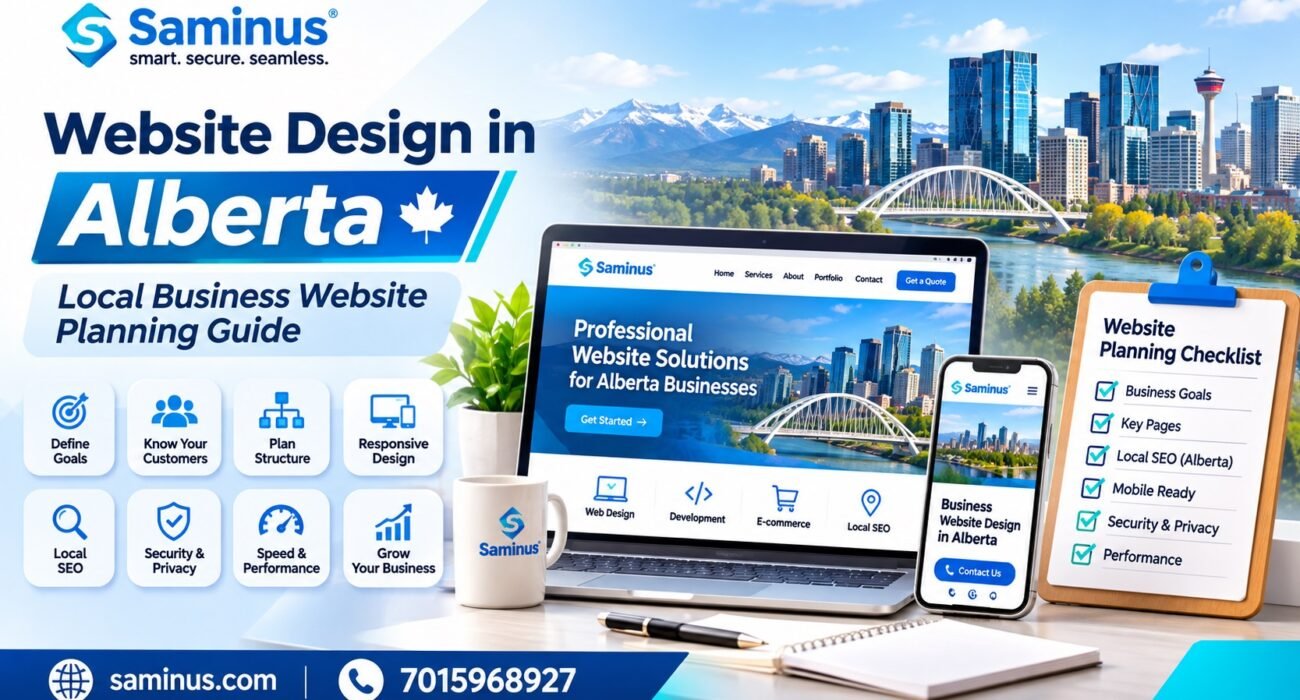
Website Design in Alberta: A Local Business Website Planning Guide
1. Start with Clear Website Goals
Before selecting colours, layouts, or website platforms, decide what your website should accomplish.
Different businesses have different objectives. A contractor may want more quote requests, while a professional consultant may need appointment bookings and an eCommerce business may focus on online sales.
Common website goals include:
- Generating customer enquiries.
- Promoting products and services.
- Increasing local brand visibility.
- Booking appointments.
- Selling products online.
- Building credibility and customer trust.
- Providing information and customer support.
Choose one primary goal and a few supporting goals. This will help guide the website structure, content, and design decisions.
2. Understand Your Target Customers
Your website should be planned around the people you want to reach.
Consider what customers are searching for, what questions they ask, and what information they need before contacting your business.
For example:
- A homeowner may want to understand your services and request an estimate.
- A business owner may compare providers before arranging a consultation.
- An online shopper may need product details, delivery information, and secure checkout.
- A new customer may want to see reviews, business credentials, and previous projects.
Understanding these customer needs helps you create relevant content and a smoother browsing experience.
3. Plan Your Website Structure
A well-organized website makes it easier for visitors to find information.
Most local business websites benefit from these essential pages:
Homepage: Introduces your business, explains your main services, and guides visitors towards the next step.
About Us: Shares your business background, expertise, values, and approach.
Services: Explains what you offer, who you serve, and how customers can get started.
Portfolio or Projects: Displays genuine examples of completed work and relevant experience.
Testimonials: Features authentic customer feedback that helps build confidence.
Blog or Resources: Answers customer questions and provides useful industry information.
Contact Us: Includes your phone number, email, service area, business location where applicable, and enquiry form.
For businesses offering several services, dedicated service pages are often more useful than placing everything on one long page.
4. Choose a Professional and Responsive Design
Your website should look professional and work smoothly across smartphones, tablets, laptops, and desktops.
Important design considerations include:
- Consistent brand colours and typography.
- Clear headings and readable text.
- Simple navigation menus.
- Proper spacing and visual hierarchy.
- High-quality and relevant images.
- Mobile-friendly layouts.
- Accessible buttons and forms.
Avoid excessive animations, unnecessary pop-ups, and cluttered layouts. Good design should make information easier to understand, not distract visitors.
5. Create Content That Builds Trust
Website content should explain your business clearly and answer the questions customers are likely to have.
For each service page, consider including:
- What the service involves.
- Who the service is suitable for.
- Problems it helps solve.
- Your working process.
- Relevant experience or examples.
- Frequently asked questions.
- A clear contact option.
Use natural language instead of filling pages with repeated keywords. Helpful, original content gives visitors a reason to trust your business and take the next step.
6. Plan Local SEO for Alberta Customers
If your business serves a particular city or region in Alberta, your website should communicate that clearly.
A practical local SEO strategy includes:
- Mentioning your actual service areas.
- Creating useful pages for important services.
- Adding accurate business contact details.
- Optimizing page titles and meta descriptions.
- Maintaining an eligible and accurate Google Business Profile.
- Collecting genuine customer reviews.
- Publishing relevant local content.
- Adding appropriate structured data.
For example, a business serving Edmonton and Calgary can create relevant content for both markets if it genuinely provides services in those locations.
Avoid creating multiple location pages with nearly identical content. Each page should offer useful information specific to the customers and services in that area.
7. Prioritize Website Speed and Performance
Website speed influences how easily visitors can browse your business online.
A slow website can interrupt the customer journey, especially when visitors are using mobile connections.
Important performance practices include:
- Compressing and resizing images.
- Using modern formats such as WebP.
- Choosing reliable hosting.
- Enabling appropriate caching.
- Reducing unnecessary scripts and plugins.
- Optimizing CSS and JavaScript.
- Monitoring Core Web Vitals.
A fast, stable website creates a better experience and makes it easier for visitors to explore your services.
8. Include the Right Business Features
The functionality of your website should match your business operations.
Depending on your requirements, useful features may include:
- Contact and enquiry forms.
- Click-to-call phone buttons.
- WhatsApp integration.
- Appointment booking.
- Customer testimonials.
- Google Maps integration.
- Blog and content management.
- Online payment integration.
- Product catalogues and shopping carts.
- Customer portals and dashboards.
Start with the features that directly support your business goals. Additional functionality can be introduced as your requirements grow.
9. Consider Privacy, Security, and Accessibility
A professional website should protect customer information and provide a usable experience for different visitors.
For Alberta businesses, website planning should consider applicable privacy requirements, including Alberta’s Personal Information Protection Act (PIPA), where relevant.
Practical steps include:
- Using HTTPS and an SSL certificate.
- Collecting only necessary customer information.
- Explaining why enquiry forms request personal details.
- Publishing an appropriate privacy notice.
- Keeping website software and plugins updated.
- Maintaining regular backups.
- Using secure administrator accounts.
- Providing meaningful image descriptions.
- Ensuring readable colour contrast and keyboard navigation.
Accessibility should be considered from the planning stage rather than added as an afterthought. WCAG guidelines provide a useful technical reference for accessible web design.
Businesses should assess their specific legal and regulatory obligations rather than assume that one standard applies to every organization.
10. Select the Right Website Development Platform
The right platform depends on your business model, content requirements, technical needs, and future plans.
WordPress: Suitable for business websites, service pages, blogs, and many content-driven websites.
Shopify: A hosted platform designed for businesses that want to manage an online store.
WooCommerce: An eCommerce solution that extends WordPress with online shopping functionality.
Custom Web Development: Suitable for businesses requiring specialized features, integrations, customer portals, or custom workflows.
Before choosing a platform, consider how easily your team can manage content, products, enquiries, and future updates.
11. Plan for Website Growth After Launch
Launching your website is the beginning of its digital journey.
Regular monitoring helps identify opportunities for improvement.
Useful tools include:
- Google Analytics 4 for traffic and conversion measurement.
- Google Search Console for search visibility and indexing.
- Google PageSpeed Insights for website performance.
- Website security and backup tools for ongoing maintenance.
Track important actions such as phone clicks, enquiry submissions, appointment bookings, and online purchases.
Review your website periodically to update services, improve content, fix technical issues, and reflect changes in your business.
Why Choose Saminus for Website Design and Development?
Saminus Private Limited provides website design, web development, and digital technology solutions for businesses.
Our approach focuses on understanding business requirements and creating digital platforms that combine professional design, practical functionality, performance, and scalability.
Our services include:
- Business and corporate website development.
- Custom website design and development.
- WordPress website development.
- eCommerce website development.
- Custom web applications.
- Responsive website design.
- Website redesign and optimization.
- Website maintenance and technical support.
Whether you are planning a new business website or upgrading an existing platform, Saminus can help you evaluate your requirements and plan a suitable digital solution.
Build a Stronger Digital Presence with Saminus
A well-planned website gives your business a professional online foundation. It helps customers understand your services, explore your expertise, and connect with your team.
For Alberta businesses, the right combination of local content, responsive design, useful functionality, and search optimization can support long-term digital growth.
If you are planning a new website or considering a redesign, connect with Saminus Private Limited to discuss your requirements.
Website: https://saminus.com/
Phone: 7015968927