
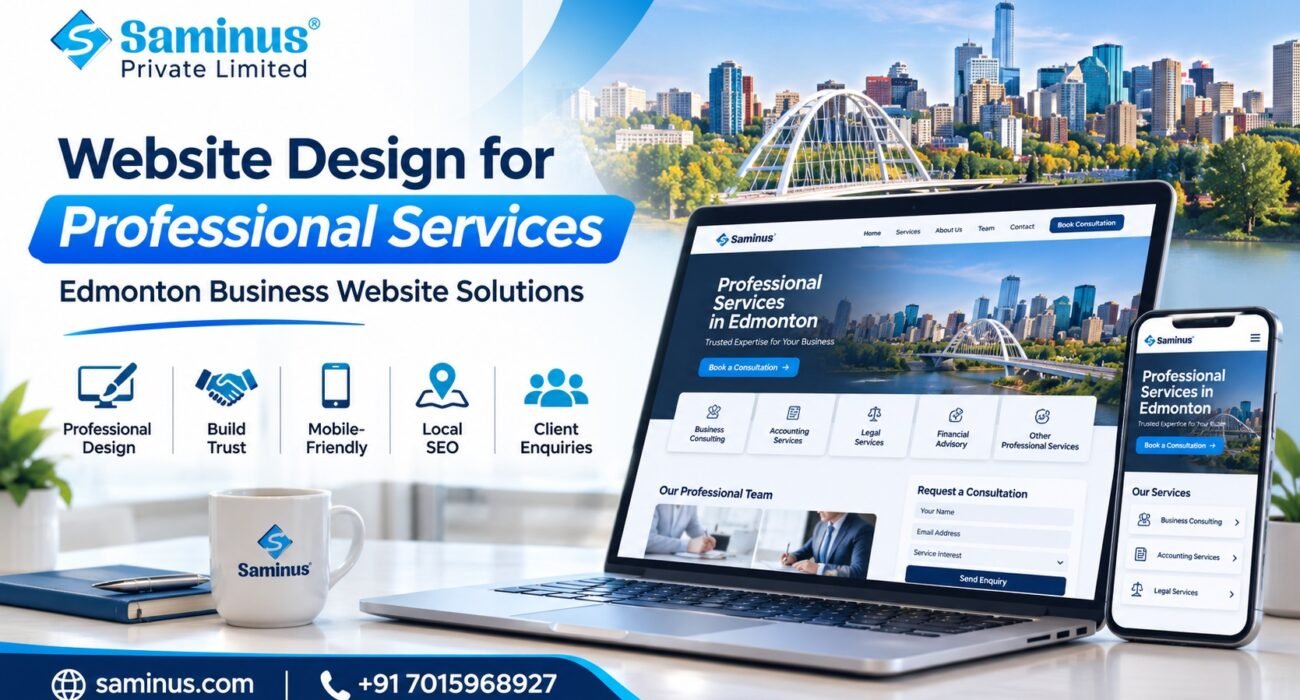
When someone searches for a lawyer, accountant, consultant, financial advisor, or healthcare professional in Edmonton, their decision often begins online.
They visit business websites, explore services, review professional credentials, and look for reasons to trust a provider before making contact.
This makes your website more than a digital business card. It is an important part of how potential clients understand your expertise and evaluate your services.
For professional service providers, website design in Edmonton should focus on three essential things: credibility, user experience, and client enquiries.
A well-planned website communicates your expertise, answers customer questions, and makes it easier for visitors to take the next step.
Why Do Professional Service Businesses Need a Professional Website?
Professional services are built on expertise and trust. Potential clients want to know who they are dealing with, what services are available, and whether the provider understands their requirements.
A professionally designed website can help your business:
- Establish a credible online presence.
- Present services in a clear and organized way.
- Showcase qualifications and professional experience.
- Build confidence through testimonials and client feedback.
- Generate consultation requests and enquiries.
- Improve visibility through relevant Google searches.
- Make your business accessible across different devices.
Your website should answer an important question for every visitor: Why should I choose your professional services?
1. Create a Professional First Impression
Your website’s design influences how visitors perceive your business.
An outdated layout, inconsistent branding, confusing navigation, or low-quality images can make your business appear less professional.
A modern professional services website should include:
- Clean and organized layouts.
- Consistent brand colours and typography.
- High-quality professional imagery.
- Easy-to-read content.
- Clear navigation menus.
- Visible contact information.
- Consistent design across all pages.
The goal is not to make the website complicated. It is to create a polished experience that reflects the quality of your services.
2. Clearly Explain Your Professional Services
Visitors should not have to guess what your business offers.
A strong website structure makes every service easy to understand.
For example:
Law Firms: Legal practice areas, lawyer profiles, consultation enquiries, and relevant legal information.
Accounting Firms: Tax preparation, bookkeeping, accounting, financial reporting, and business advisory services.
Business Consultants: Consulting services, industry expertise, case studies, and business solutions.
Financial Advisors: Advisory services, professional credentials, financial planning information, and appointment requests.
Healthcare Professionals: Professional profiles, treatment information, facilities, and appointment enquiries.
Each important service should have a dedicated page explaining its purpose, benefits, and how clients can request more information.
3. Build Trust Through Professional Credentials and Experience
Trust is especially important when customers are selecting a professional service provider.
Your website should communicate why visitors can feel confident contacting your business.
Consider including:
- Professional qualifications and certifications.
- Team and leadership profiles.
- Industry experience.
- Relevant memberships and affiliations.
- Genuine customer testimonials.
- Case studies where appropriate.
- Clear business contact information.
For regulated professions, ensure that all credentials, testimonials, advertising claims, and professional information follow the applicable industry and regulatory requirements.
Avoid exaggerated promises. Clear and accurate information builds stronger credibility.
4. Make Your Website Mobile-Friendly
Many potential clients discover professional services using smartphones.
If your website is difficult to browse on a mobile device, visitors may struggle to read information, explore services, or contact your business.
Responsive website design helps your website adapt to different screen sizes.
Important mobile-friendly features include:
- Responsive page layouts.
- Readable font sizes.
- Easy-to-use navigation.
- Mobile-friendly enquiry forms.
- Click-to-call phone numbers.
- Properly sized images.
- Accessible buttons and links.
A consistent experience across mobile, tablet, and desktop devices makes your website more convenient for potential clients.
5. Design Your Website to Generate Client Enquiries
A professional website should guide visitors towards a useful next step.
For service-based businesses, that action might be booking a consultation, requesting information, or submitting an enquiry.
Useful website features include:
Clear Calls-to-Action: Use buttons such as Contact Us, Request a Consultation, or Book an Appointment.
Simple Contact Forms: Ask only for the information needed to understand the enquiry.
Click-to-Call Options: Allow mobile visitors to contact your business directly.
Appointment Booking: Integrate a suitable booking system when your business requires scheduled consultations.
WhatsApp or Messaging Options: Provide convenient communication channels where appropriate.
Make sure every important service page gives visitors a clear way to contact your team.
6. Improve Google Visibility with SEO-Friendly Website Design
A visually attractive website needs a strong search engine foundation.
Search Engine Optimization (SEO) helps search engines understand your website and its relevance to customer searches.
For professional service businesses in Edmonton, important SEO elements include:
- Relevant service-specific keywords.
- Descriptive page titles and meta descriptions.
- Clear H1, H2, and H3 headings.
- SEO-friendly URLs.
- Useful and original website content.
- Optimized images and alt text.
- Internal linking between related pages.
- Mobile responsiveness.
- Website performance optimization.
- Appropriate structured data.
For example, a business may create relevant pages around searches such as:
- Professional Website Design Edmonton.
- Accounting Services Edmonton.
- Business Consulting Edmonton.
- Legal Services Edmonton.
- Financial Advisory Services Edmonton.
Target keywords should match the actual services and locations served by your business.
SEO-friendly development provides a foundation for search visibility, but rankings depend on many factors and cannot be guaranteed.
7. Use Local SEO to Reach Edmonton Clients
If your business serves clients in Edmonton, local SEO can help improve your visibility for relevant location-based searches.
Important local SEO activities include:
- Optimizing your Google Business Profile.
- Maintaining accurate business information.
- Adding relevant service categories.
- Publishing location-specific website content.
- Collecting genuine customer reviews.
- Maintaining consistent contact details.
- Creating useful local service pages.
You should also make it easy for visitors to find your business address, service areas, contact information, and business hours.
Local SEO should reflect where your business genuinely operates rather than targeting locations you do not serve.
8. Focus on Website Speed, Accessibility and Security
A professional website must work reliably.
Slow-loading pages, inaccessible content, broken forms, and security warnings can affect the visitor experience.
Consider these technical improvements:
Website Speed: Optimize images, reduce unnecessary scripts, and use suitable hosting.
Accessibility: Use readable typography, sufficient colour contrast, descriptive links, keyboard-friendly navigation, and meaningful image descriptions.
Website Security: Maintain HTTPS, update software, use strong passwords, and keep regular backups.
Form Protection: Use appropriate spam prevention and secure handling of submitted information.
Privacy: Explain how customer information is collected and used. Professional service providers should consider applicable Canadian privacy requirements, including Alberta’s Personal Information Protection Act (PIPA) where relevant.
A reliable website protects both the business experience and the people using it.
9. Essential Pages Every Professional Services Website Should Have
A well-structured website helps visitors find information quickly.
Depending on your business, consider including:
- Home: Introduces your business and its main services.
- About Us: Explains your background, expertise, and approach.
- Services: Describes each professional service.
- Our Team: Presents relevant professional profiles and credentials.
- Testimonials: Shares genuine client feedback where permitted.
- Blog or Resources: Answers common questions and provides useful information.
- Contact Us: Provides phone, email, address, and enquiry options.
- Privacy Policy: Explains how personal information is handled.
Not every business needs every page. Choose a structure that reflects your services and customer journey.
10. How to Choose the Right Website Development Partner
Selecting the right development company is an important part of building your professional website.
Before hiring an agency, review:
- Its website design and development portfolio.
- Experience with professional service websites.
- Technical capabilities and preferred platforms.
- Mobile responsiveness and SEO practices.
- Communication and project management process.
- Website ownership and handover arrangements.
- Maintenance and technical support options.
A suitable partner should understand your business objectives and recommend solutions based on your actual requirements.
How Saminus Helps Professional Service Businesses
A professional website should represent the quality of the services your business delivers.
Saminus Private Limited helps businesses create professional digital experiences through website design, development, and technology solutions.
Our services include:
- Professional business website design.
- Custom website development.
- WordPress website development.
- Responsive website design.
- SEO-friendly website structure.
- Website redesign and modernization.
- Custom web applications.
- Website performance optimization.
- Website maintenance and technical support.
Whether you are an independent consultant, professional firm, or established service company, Saminus can help you build a website aligned with your brand and business goals.
Explore our services at Saminus.
Build a Website That Reflects Your Professional Expertise
Your website is often the first step in a potential client’s relationship with your business.
A clear design, useful content, professional credentials, mobile-friendly experience, and simple enquiry process can make that first interaction more meaningful.
For professional service providers in Edmonton, investing in a well-planned website can support brand credibility, customer engagement, and long-term digital growth.
If you are planning a new website or want to improve your existing online presence, connect with Saminus Private Limited.
Saminus Private Limited
Website: https://saminus.com/
Mobile: +91 7015968927
Let’s build a professional digital presence that reflects the value of your services.